The beginnings of Gandhi’s thoughts on education can be traced to his life at Tolstoy Farm in South Africa. It was there that he came to a realisation that anything imposed upon a child is not education, but a form of punishment. For many years, he had shared his reflections on learning and its purpose through his writings. Yet it was only at the Wardha Conference of 1937 that he was able to give these ideas a clear and complete form. From that moment, the vision of “Naitalim”, or “Basic Education”, began to take root in India. Under Gandhi’s guidance, Zakir Husain, Kaka Kalelkar, and Ariyanayakam developed this vision into a complete educational model. Gandhi saw in Tagore’s Shantiniketan an early echo of the same spirit, calling it “the root of education for self-liberation.” By 1945, through the efforts of educator Zakir Husain, more than two thousand schools across India had begun to follow this new model of learning.
In Tamil Nadu, Dr T.S. Soundaram and Dr G. Ramachandran founded Gandhigram University, which became the living embodiment of NaiTalim in South India. Here, learning, work, and service were intertwined with the purpose of shaping a complete human being. To understand Naitalim is to recognise Gandhi’s vision of education as inseparable from life itself. He believed that action must lie at the heart of learning. Against the dehumanisation of war and industrial violence, products of intellect stripped of empathy, Gandhi dreamed of an education rooted in human compassion, one that would nurture independent, self-reliant individuals capable of working for the good of all.
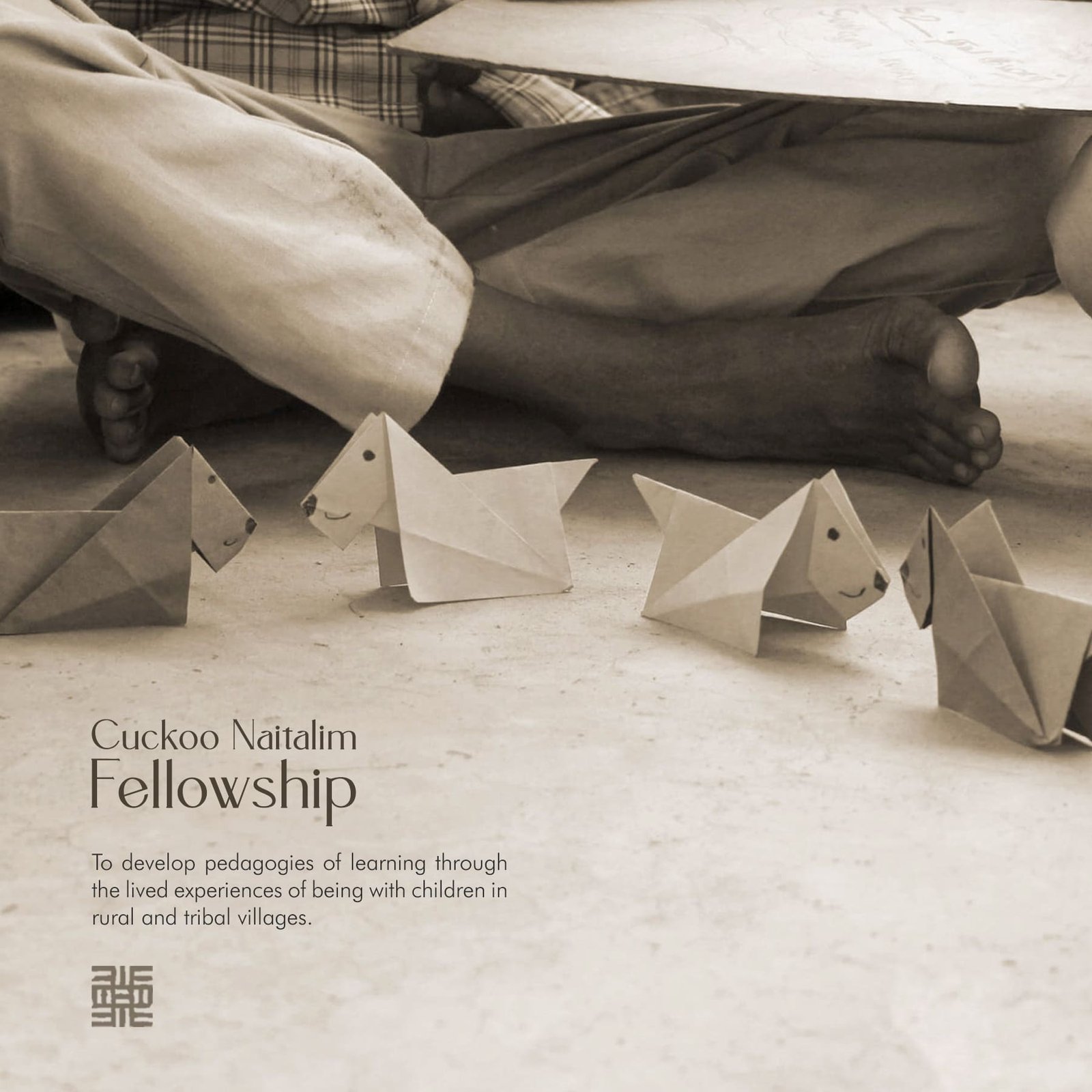
This education is not merely about physical labour; it seeks harmony among the head, the heart, and the hand. When thought, feeling, and action are in tune, the child finds both inner and outer freedom. A child who learns to spin a rope also learns mathematics; one who kneads clay learns science; and those who fold paper into forms discover the rhythm of art, geometry, and logic all at once. In 1953, UNESCO’s International Conference on Education and Human Rights recognised Mahatma Gandhi as one of the greatest educators of the twentieth century. His philosophy of NaiTalim was described as a model that unites knowledge, labour, and moral integrity, a vision that continues to inspire educators across the world.
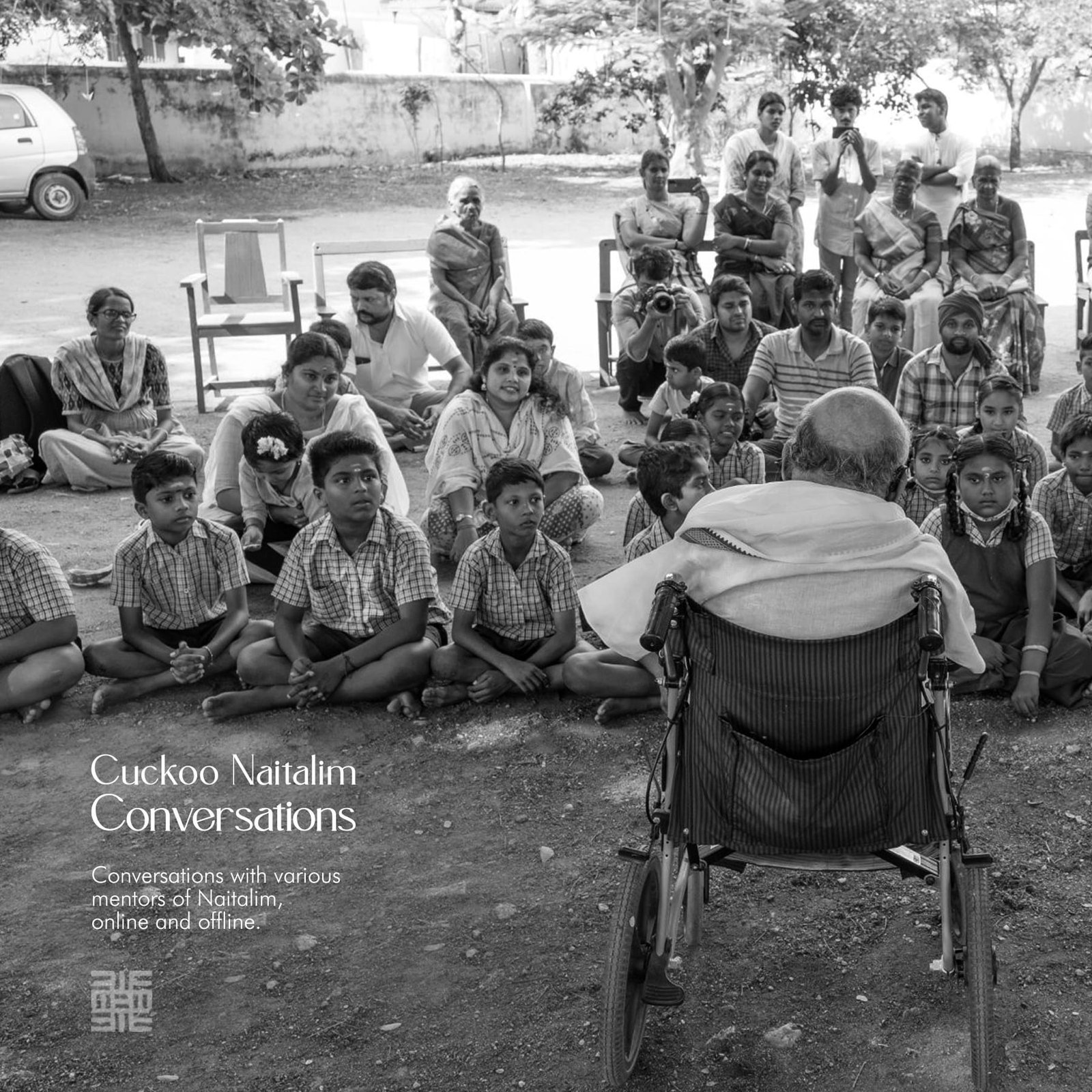
From the earliest days of Cuckoo movement for Children, experiments with Naitalim inspired education have been taking shape. Over time, they have grown into what we now call the Cuckoo Naitalim Education Collective. Through this initiative, we commit to continuing our work in multiple directions connected to this philosophy. Our efforts include, introducing children in the villages at the foothills of the Javvadu Hills to education through art; training teachers in the NaiTalim approach; integrating various art forms into the learning curriculum; facilitating dialogues with educators; selecting young fellows through the NaiTalim Fellowship to work in the field and document experiential learning; and learning firsthand from schools across India that continue to embody the Naitalim pedagogy.
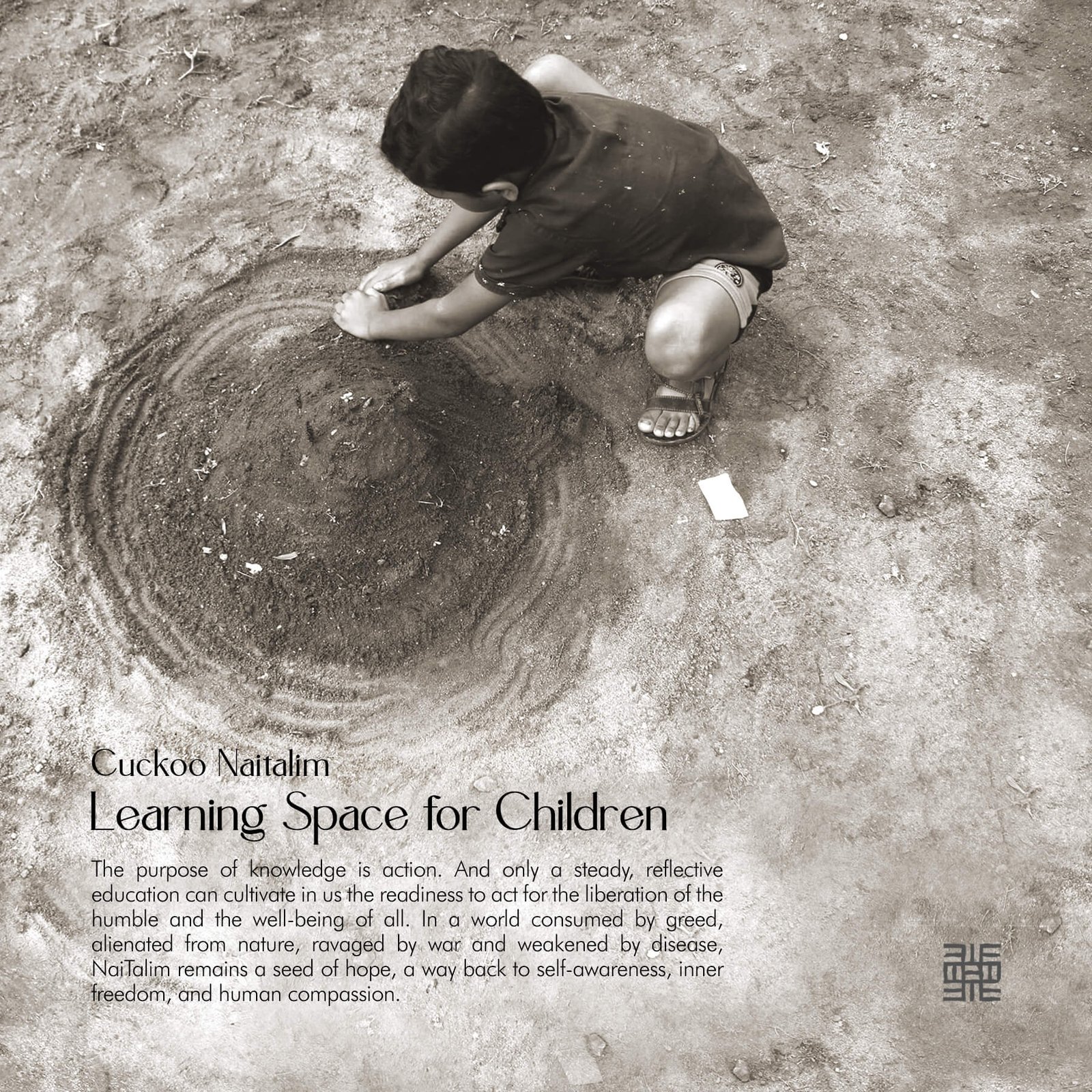
To remember, to bow, and to offer gratitude to one who gave his life in service of an ideal is a timeless human tradition, and among those who became living scriptures of the truths they cherished was Ayya Karunakaran, former Vice Chancellor of Gandhigram University, whom we at this moment remember with heartfelt gratitude. “The purpose of knowledge is action,” said Aristotle. And only a steady, reflective education can cultivate in us the readiness to act for the liberation of the humble and the well-being of all. In a world consumed by greed, alienated from nature, ravaged by war, and weakened by disease, NaiTalim remains a seed of hope, a way back to self-awareness, inner freedom, and human compassion.